
World Heritage Significance
Woolmers Estate is one of only eleven Australian Convict Sites inscribed on the UNESCO World Heritage List.
Why Woolmers Is World Heritage
On 31 July 2010, Brickendon and Woolmers Estates were inscribed on the UNESCO World Heritage List as part of the Australian Convict Sites, a serial listing of eleven outstanding heritage places across Australia. Collectively, these sites represent the global phenomenon of the forced migration of convicts and its association with developments in the punishment and reform of crime during the modern era. as part of the Australian Convict Sites, a serial listing of eleven outstanding heritage places across Australia. Collectively, these sites represent the global phenomenon of the forced migration of convicts and its association with developments in the punishment and reform of crime during the modern era.
Each of the eleven sites demonstrates a different element of the convict story. Port Arthur demonstrates the penal settlement. Cascades Female Factory demonstrates the experience of women. The Coal Mines demonstrate industrial forced labour.
Brickendon and Woolmers were recognised for something the other sites cannot convey: the Assignment System. This was the mechanism by which transported convicts were assigned to free settlers, who provided food, clothing and shelter in return for their labour. Masters were responsible for ensuring religious instruction, and convicts were not required to work on Sundays. The system was founded on a remarkably practical premise: that convicts could be reformed through meaningful employment, under the moral guidance of their masters, while masters accessed cheap labour and the government was relieved of almost all expense.: the Assignment System. This was the mechanism by which transported convicts were assigned to free settlers, who provided food, clothing and shelter in return for their labour. Masters were responsible for ensuring religious instruction, and convicts were not required to work on Sundays. The system was founded on a remarkably practical premise: that convicts could be reformed through meaningful employment, under the moral guidance of their masters, while masters accessed cheap labour and the government was relieved of almost all expense.
The estates are regarded as the most significant rural estates in Australia with a strong connection to convictism. They had a combined convict population of over 100 workers at any given time, the second-largest pool of assigned convict labour in Van Diemen’s Land behind only the Van Diemen’s Land Company in the far northwest. The Archer brothers had a reputation for being kind to their male and female convict workers, and the labour and skill of these convicts proved essential in the establishment of both properties while supporting their rehabilitation from criminal to useful citizen.
The Physical Evidence
What sets Brickendon and Woolmers apart further is the physical evidence. Both properties retain their original convict-built structures, not as ruins or reconstructions, but as intact buildings. Woolmers has 18 original buildings across 13 hectares, including one of the oldest surviving two-storey shearing sheds in Australia (c. 1820) and a blacksmith shop with its original slate roof and unglazed windows (1822). Brickendon has more than 20 convict-built buildings across a 465-hectare working farm still operated by seventh-generation Archer descendants. It is one of the few convict sites on earth still being used for its original purpose.
These are also the only two privately owned sites in the World Heritage listing. All other sites are government owned and receive government heritage operating funding.
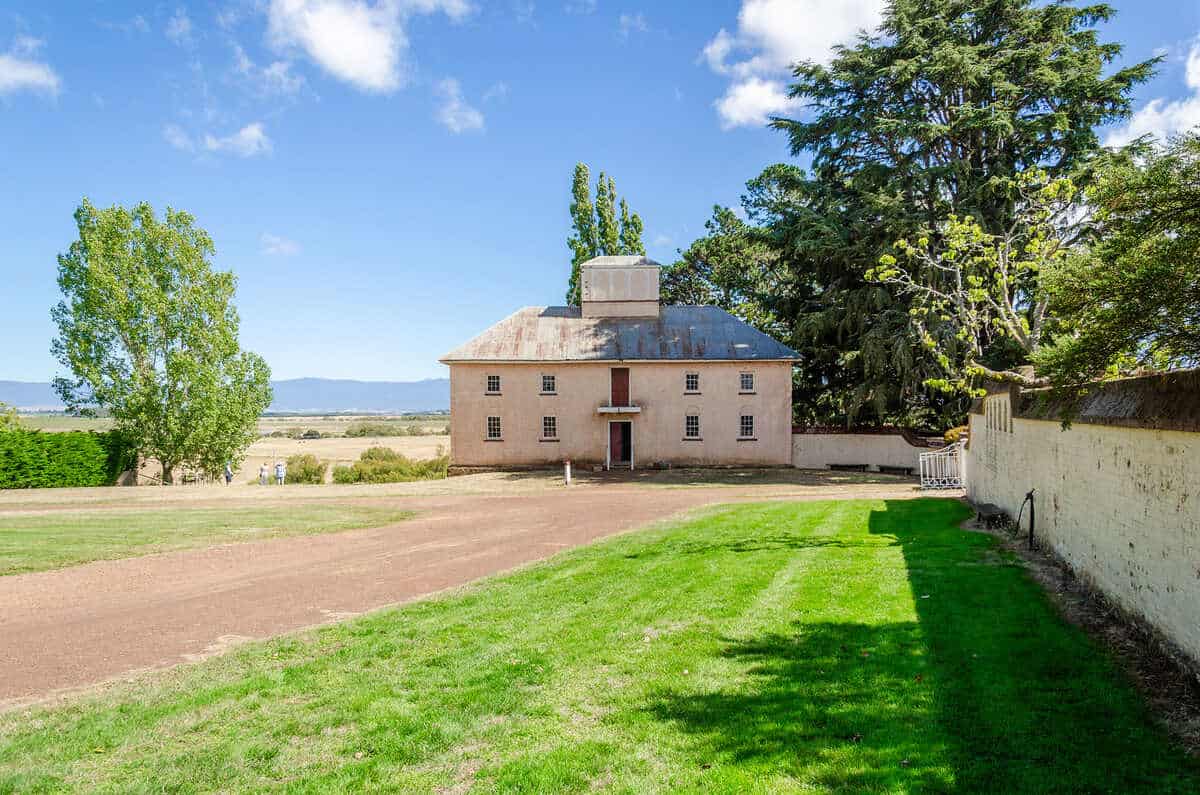
The Store
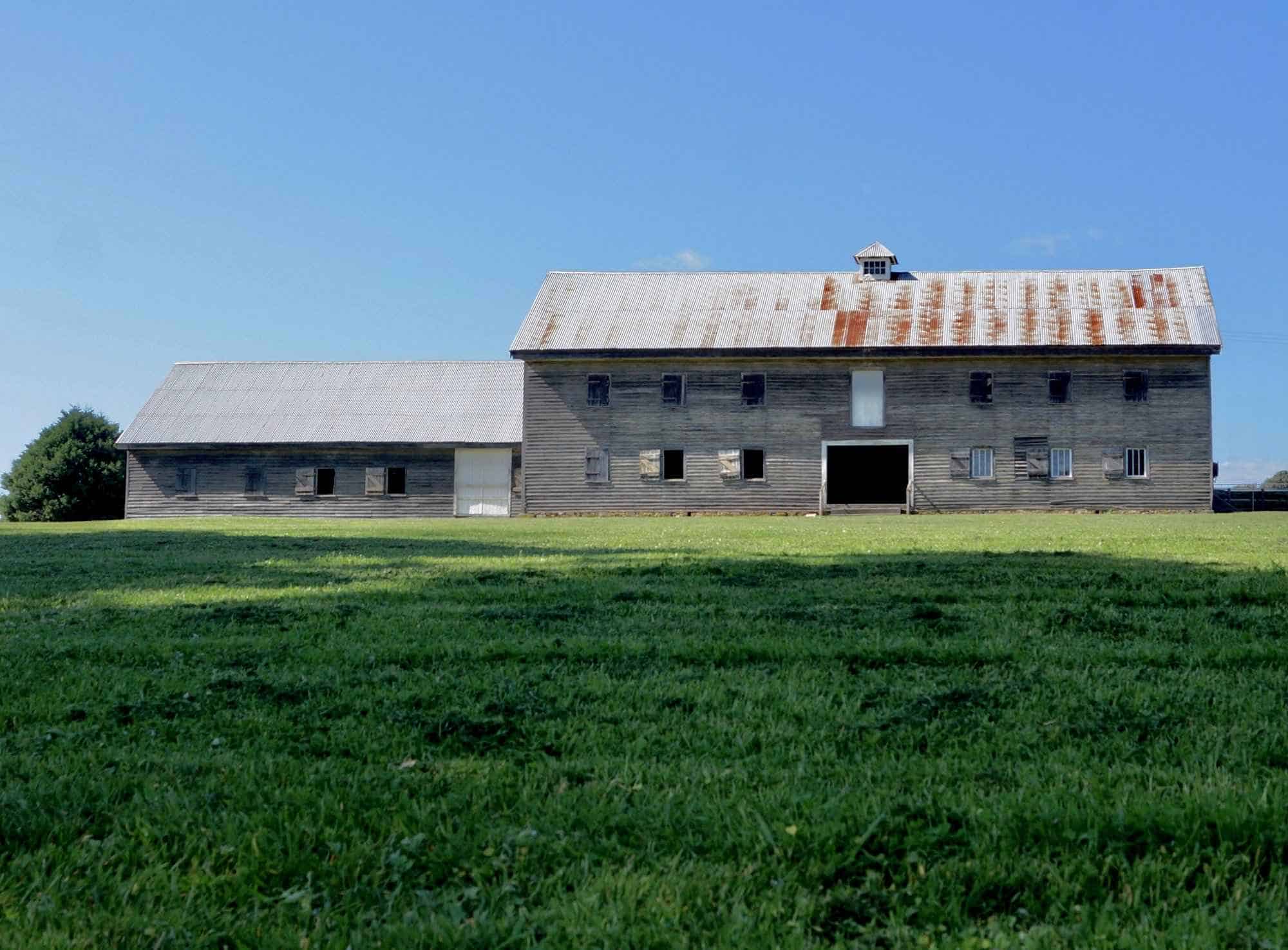
Wool Shed c.1820
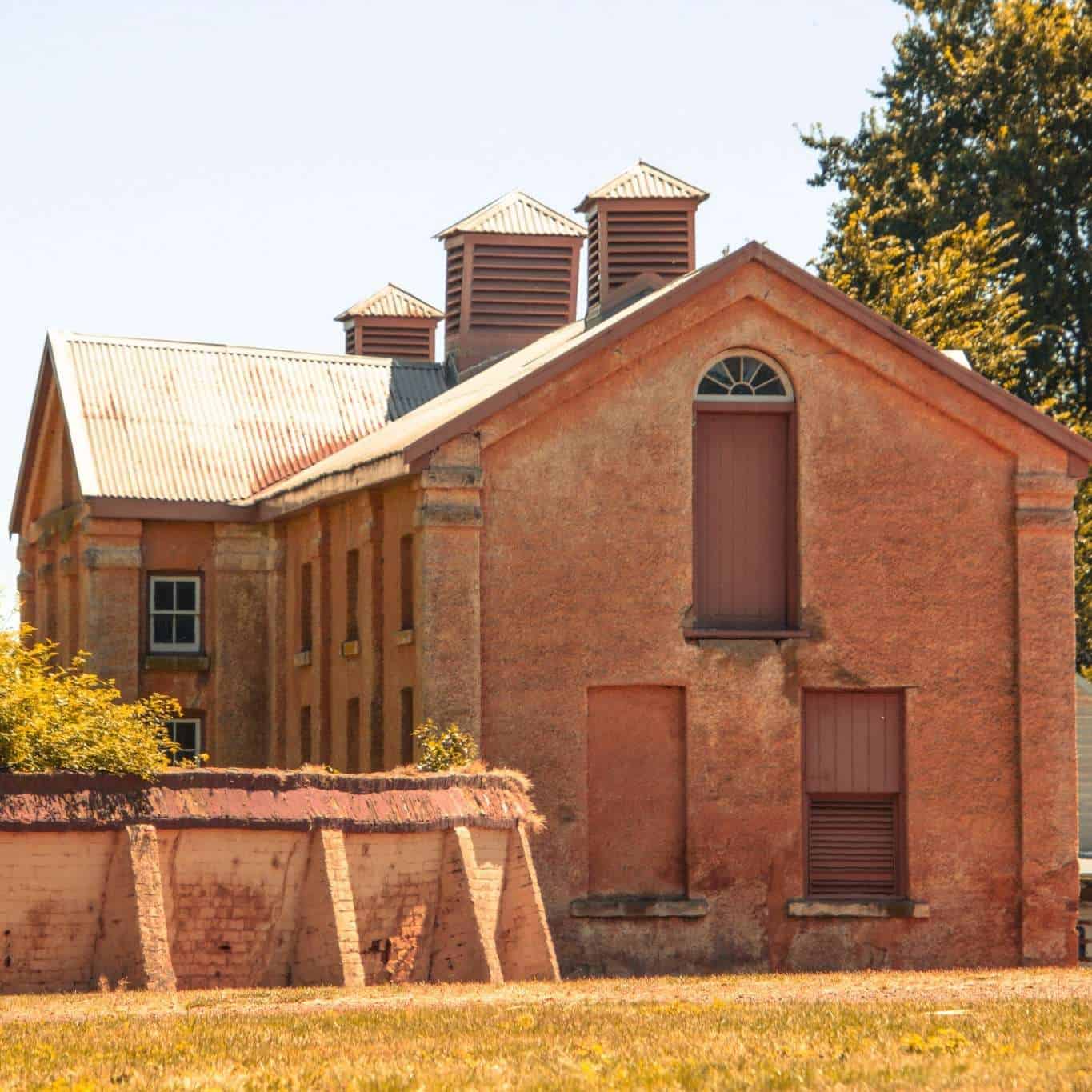
Coach House & Stables
The World Heritage Criteria
To be included on the World Heritage List, sites must be of Outstanding Universal Value and meet at least one of ten selection criteria. The Australian Convict Sites fulfil two cultural heritage criteria.
Building & Landscape Ensemble
To be an outstanding example of a type of building, architectural or technological ensemble or landscape which illustrates a significant stage in human history.
The Australian Convict Sites provide an outstanding example of the way in which conventional forced labour and national prison systems were transformed, in the 18th and 19th centuries, into a system of deportation and forced labour forming part of the British Empire’s vast colonial project. They bear witness to a penitentiary system that had many objectives, ranging from severe punishment used as a deterrent to forced labour for men, women and children, and the rehabilitation of convicts through labour and discipline.
Events & Living Traditions
To be directly or tangibly associated with events or living traditions, with ideas, or with beliefs, with artistic and literary works of outstanding universal significance.
The transportation of criminals, delinquents and political prisoners to colonial lands by the great nation states between the 18th and 20th centuries is an important aspect of human history. The Australian convict settlements provide a particularly complete example of this history. They illustrate the process of creating a colonial population of European origin through the dialectic of punishment and transportation, followed by forced labour and social rehabilitation, to the eventual social integration of convicts as settlers.
The Eleven Australian Convict Sites
Tasmania (5 sites)
New South Wales (4 sites)
Norfolk Island (1 site)
Western Australia (1 site)
The sites included in the 2010 World Heritage nomination were selected because they represented penal transportation in cross-section. They included: places of punishment (Cascades Female Factory, Port Arthur, Kingston & Arthurs Vale, the Coal Mines, Darlington, Cockatoo Island & the Old Great North Road); sites where prisoners were processed on arrival (Fremantle Prison, Cascades & Hyde Park Barracks); & administrative centres (Old Government House). Two sites – Brickendon & Woolmers Estates – were included to represent the experience of convict labour in the private sector. This was a majority experience. On average 60 percent of male and 80 percent of female convicts worked for private masters and mistresses at any given moment. Without understanding the way in which transportation intersected with private interest it is impossible to appreciate the wider role convict labour played in First Nation dispossession, the colonisation of the continent & the development of a dynamic settler economy.
These eleven sites are the preeminent examples of Australia’s rich convict history, though more than 3,000 other convict sites still remain across the country. All eleven are also listed on the Australian National Heritage List and are protected by Commonwealth, state and territory legislation.
The Global Story of Forced Migration
The story told at Woolmers is part of something much larger. Between 1787 and 1868, approximately 166,000 men, women and children were transported from Britain and Ireland to Australia. Of these, 75,000 were sent to Van Diemen’s Land (Tasmania), representing around 45 per cent of all convicts transported to Australia and 15 per cent of all those transported within the British Empire.
British transportation to Australia was the world’s first conscious attempt to build a new society from the labour of convict prisoners. Countries including Britain, France, Spain, the Netherlands, Portugal, Russia and Argentina all transported convicts to penal colonies across the globe. The Australian Convict Sites World Heritage Property provides the most complete surviving example of this global phenomenon.
Transportation was not limited to male and female adults convicted of crimes. Children as young as nine were transported. Among the 166,000 were also more than 3,600 political prisoners: Irish rebels, Scottish radicals, the Tolpuddle Martyrs, Luddites and Chartists who had fought for the democratic rights their descendants now take for granted.
For generations, convict ancestry was a source of shame in Australian families, whispered about rather than spoken of. That is changing. More than one in five Australians is descended from a convict, and the community is now moving beyond shame to a fascination with this complex, deeply human history.
Woolmers' Role in the Assignment System
Under the Assignment System, transported convicts were assigned to free settlers who were then responsible for adequately feeding, clothing and housing them in return for their labour. Skilled workers were in great demand, but one of the system’s great strengths was its capacity to rehabilitate convicts by giving them employable skills through on-the-job training. These skills could then be put to good account when convicts received a Ticket-of-Leave, permitting them to engage in paid work on their own account. Most convicts received a Ticket-of-Leave well before the expiration of their original sentence.
Convicts who began their lives on the Archer properties as “assigned servants” (the term “convicts” was seldom used) often chose to remain for years, and in some cases decades, after they were free to leave. Over the years, they were joined by free workers, some of whom were assisted migrants from Britain seeking to make a new life in the colonies.
Over a 35-year period, more than 700 convicts were assigned to Woolmers Estate. Having learned skills under Thomas Archer’s mastership and gaining their freedom, many became respectable citizens. At Brickendon and Woolmers, there are numerous buildings where convicts and ex-convicts once laboured and lived. These buildings, and the stories of the people who built them, are the reason this place holds World Heritage significance. where convicts and ex-convicts once laboured and lived. These buildings, and the stories of the people who built them, are the reason this place holds World Heritage significance.
Learn more about daily life, working conditions and the pathway from transportation to freedom at Woolmers Estate.
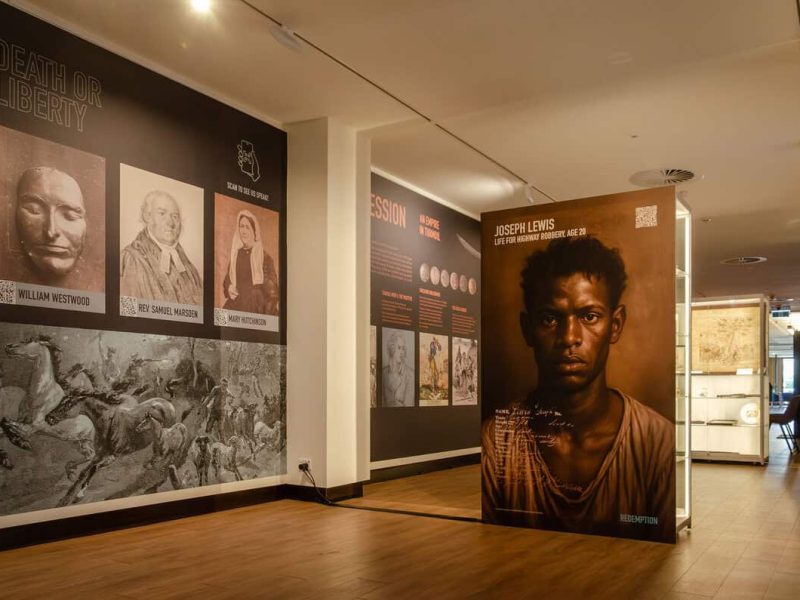
UNSHACKLED Exhibition
An immersive digital experience telling the stories of 75,000 convicts transported to Van Diemen’s Land. Walk through the journey from conviction to freedom — emotional, confronting, unforgettable.
- 45–60 min self-guided experience
- Digital interactive displays
- Original convict artefacts
- AI-generated convict portraits
- Included with general admission
Experience living history
Open Daily from 8am
Last grounds entry: 4pm
Grounds close: 6:30pm
Location
20 minutes from Launceston
17 minutes from Launceston Airport
Tasmanian Residents
FREE entry when bringing interstate or overseas guests
Admission
All proceeds support conservation of this World Heritage site