We are a not-for-profit organisation. Your donation supports the conservation of this World Heritage site
Help protect this UNESCO site
He was sentenced to transportation for life. He named his own home after the place of his servitude. This is the Assignment System.
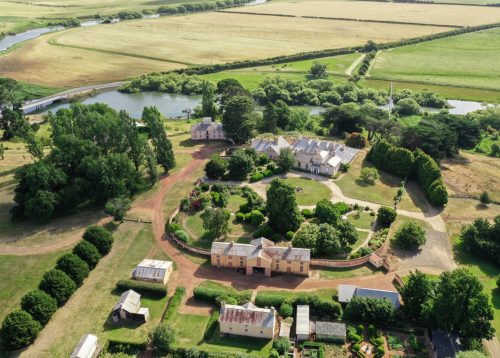
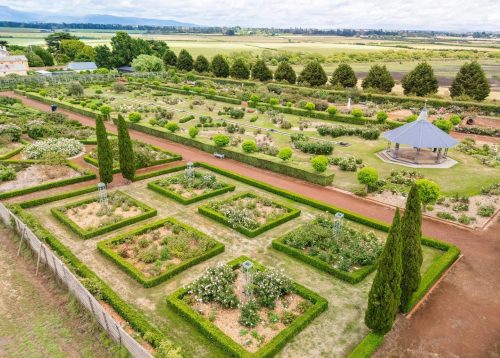
Woolmers Estate, Longford, Tasmania.
In 1831, a young man of Jamaican heritage named Joseph Lewis was convicted of highway robbery in London and sentenced to transportation for life. He arrived in Van Diemen’s Land and was assigned to Woolmers Estate in the northern midlands, where he worked as a groomsman for Thomas Archer. He earned his freedom in 1840, moved to Hobart, married, ran a hotel, then relocated to Geelong where he built himself a grand home with four acres of gardens. He named it “Woolmers.”
That a man sentenced to die in a foreign colony would later name his own home after the place of his servitude tells us something profound about the convict experience that most Australians have never been taught. It is a story not of chains and punishment, but of the Assignment System, the mechanism by which the majority of convicts transported to Van Diemen’s Land were sent to work on private properties, learning trades, building infrastructure and in many cases earning their freedom and becoming respected citizens.
Most Australians, if they think about convicts at all, think about Port Arthur. They picture chains and lashes, stone cells and silent punishment. It is a powerful story and Port Arthur tells it masterfully. But it is not the whole story and arguably not even the typical one. The majority of the roughly 74,000 convicts transported to Van Diemen’s Land never saw the inside of a penal station. Instead, they were funnelled through the Assignment System, a vast administrative apparatus that allocated convict labour to free settlers across the colony. Convicts became farm workers, shepherds, domestic servants, blacksmiths, carpenters. They lived not in cells but in cottages and outbuildings on private estates. Their daily existence looked, in many cases, remarkably like work.
The system operated on 'the silent yet most efficient principle of self-interest.' Good behaviour was rewarded with increasing freedoms. The incentive to reform was built into the architecture of the system itself.
The system was elegant in theory. Governor George Arthur, who administered Van Diemen’s Land from 1824 to 1836, described it as operating on “the silent yet most efficient principle of self-interest.” Masters received free labour. In exchange, they were obligated to provide food, clothing and shelter. Convicts were separated from what authorities called “evil companions” and given structured days with clear expectations. Good behaviour was rewarded with increasing freedoms: a ticket-of-leave allowing them to work for wages, then a conditional pardon and eventually, for some, a full pardon. The incentive to reform was built into the architecture of the system itself. Work hard, stay out of trouble and it would, in time, set you free.
In practice, of course, it was messier than that. Historians have described the Assignment System as a “lottery” because the quality of a convict’s experience depended on how useful they were. Convicts with skills had greater bargaining power and generally fared better than their less skilled counterparts. The system was riddled with uncertain outcomes and the range of possible fates was so vast that no single narrative can capture them all. But it is possible to look at specific places where the system worked as intended and two of the most significant sit side by side on the Macquarie River in northern Tasmania.
Thomas Archer arrived in Van Diemen’s Land in 1813 and by 1817 had established Woolmers Estate, twenty minutes south of what would become Launceston. His brother William settled the adjoining property, Brickendon, in 1824. Over the following three decades, the two estates received a combined convict population of more than one hundred workers at any given time, the second-largest pool of assigned convict labour in Van Diemen’s Land behind only the Van Diemen’s Land Company in the far northwest. The Archers had a reputation for treating their assigned workers well. Convicts at Woolmers worked from six or seven in the morning until half past four in winter, six in summer. They had Sundays off and Saturday afternoons free. They ate a meat-rich diet and slept in purpose-built accommodation that was, according to several historical assessments, better than what many free labourers endured in Britain at the time.
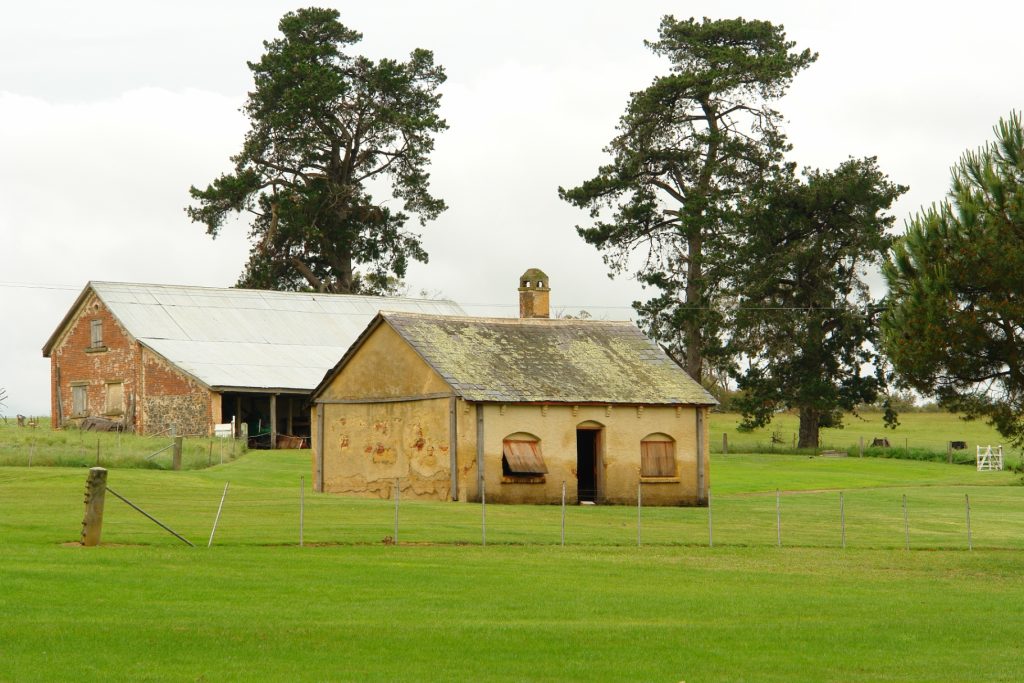
What makes Brickendon and Woolmers remarkable is not only the history but the physical evidence. Both properties retain their original convict-built structures, not as ruins but as intact buildings you can walk through and around. Woolmers has eighteen buildings across thirteen hectares, including one of the oldest surviving two-storey shearing sheds in Australia, dating to around 1820, and a blacksmith shop with its original slate roof and unglazed windows from 1822. Convict graffiti is still visible on the woolshed walls. The provisions store stands three floors high. The workers’ cottages are the same cottages. These are not reconstructions or heritage replicas. They are the actual buildings where assigned convicts worked, slept and learned the trades that would eventually earn them their freedom.
Brickendon, a short walk along the river, tells the other half of the story. Its twenty convict-built buildings include a Gothic chapel, Sussex barns, a cookhouse, smokehouse and a timber pillar granary, all set within a 465-hectare working farm still operated by seventh-generation Archer descendants. It is one of the few convict sites on earth still being used for its original purpose.
When the two properties were inscribed on the UNESCO World Heritage List in 2010 as part of the Australian Convict Sites, they were recognised for demonstrating something the penal stations could not: the Assignment System at scale. Not punishment, but productive rural labour that built skills, created opportunity and for many, became home.
The convict story extends well beyond petty criminals and highway robbers like Lewis. Among the 160,000 men and women transported to Australia were more than 3,600 political prisoners: Irish rebels, Scottish radicals, the Tolpuddle Martyrs, Luddites, Chartists and others who had agitated for the democratic rights their descendants now take for granted. These were not criminals in any meaningful sense. They were organisers and agitators and transportation was the British government’s answer to their inconvenient demands for representation, fair wages and the right to organise. Professor Hamish Maxwell-Stewart, one of Australia’s leading convict historians, has argued that transportation should be understood not as a tale of shame but as one of the nation’s great foundational stories of survival, resistance and transformation.
More than one in five Australians is descended from a convict. For generations, this was whispered about rather than spoken of. That is changing.
More than one in five Australians is descended from a convict. For generations, this was whispered about rather than spoken of. That is changing.
More than one in five Australians is descended from a convict. For generations, this was whispered about rather than spoken of. The shame ran deep, reinforced by a popular narrative that reduced 160,000 individual lives to a single grim image of chains and degradation. That is changing, gradually but unmistakably. Australians are beginning to see their convict ancestry not as a stain but as a source of resilience and the Assignment System is central to this reappraisal. It reveals the complexity that the punishment narrative obscures. Convicts were not a single class of wretched souls. They were individuals with wildly different fates, shaped by the luck of which master they drew and the skills they brought with them. Some suffered terribly. Others, like Joseph Lewis, built lives of substance and dignity from the most unpromising of beginnings.
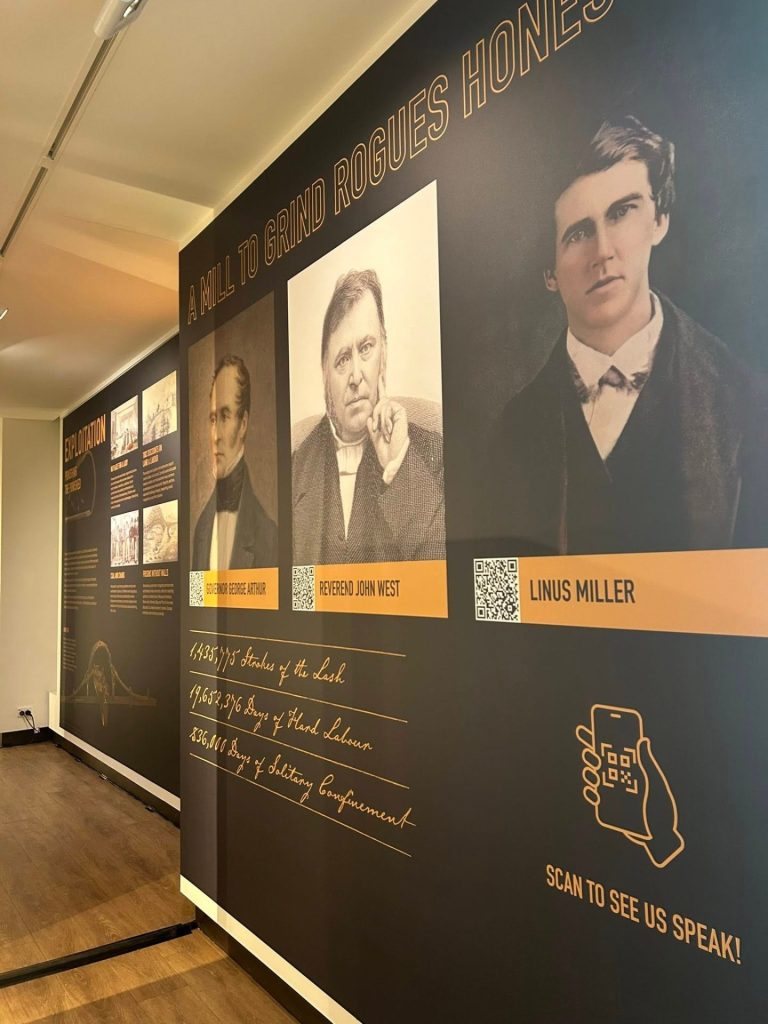
An immersive digital experience telling the stories of 75,000 convicts transported to Van Diemen’s Land. Walk through the journey from conviction to freedom — emotional, confronting, unforgettable.
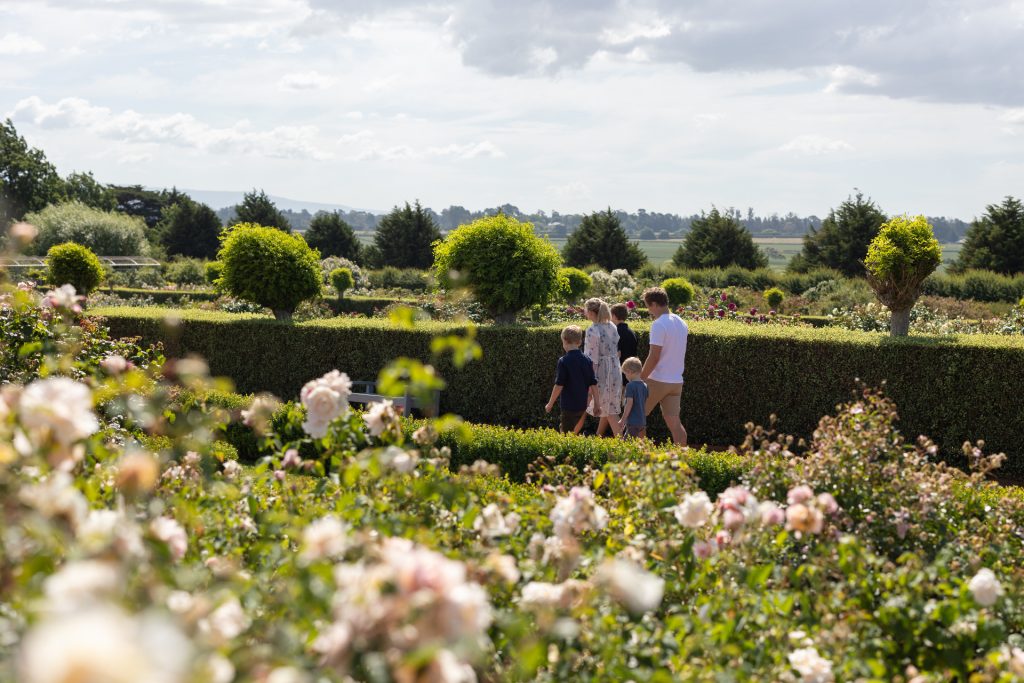
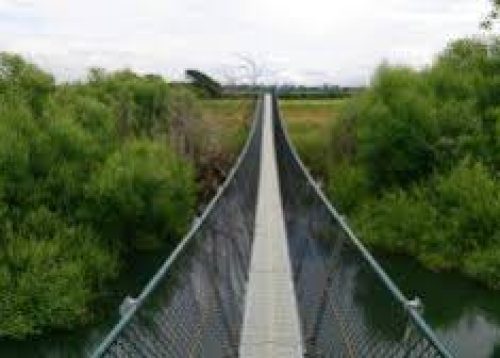
Cross the suspension bridge connecting both World Heritage properties. A self-paced journey through 200 years of convict and colonial history, with interpretive signs along the route.
Last grounds entry: 4pm
Grounds close: 6:30pm
20 minutes from Launceston
17 minutes from Launceston Airport
FREE entry when bringing interstate or overseas guests
All proceeds support conservation of this World Heritage site