

The Convict Story You Haven't Heard
At Woolmers Estate, convicts gained skills, earned freedom and often chose to stay. This is the Assignment System. This is the other side of Australia’s convict history.
What Was the Assignment System?
Most people think Australia’s convict story is one of chains, cells and punishment. That is the story Port Arthur tells, and tells masterfully. But it is only half the story.
Under the Assignment System, transported convicts were assigned to free settlers like the Archer family at Woolmers. Masters were required to provide adequate food, clothing and shelter in return for convict labour. They were also responsible for ensuring religious instruction, and convicts could not be required to work on Sundays.
The system was founded on a remarkably modern premise: that convicts could be reformed through meaningful employment, under the moral guidance of their masters, while masters accessed cheap labour and the government was relieved of almost all expense.
Skilled workers were in great demand. But one of the system’s great strengths was its capacity to rehabilitate convicts by giving them employable skills through on-the-job training. These skills could then be put to good use when convicts received a Ticket-of-Leave, permitting them to engage in paid work on their own account.
Most convicts received a Ticket-of-Leave well before the expiration of their original sentence. Convicts who began their lives on the Archer properties as ‘assigned servants’ often chose to remain for years, and in some cases decades, after they were free to leave.
Punishment vs Rehabilitation
Port Arthur & Penal Settlements
Convicts held in penal settlements. Punishment as control. Chains, cells, isolation. Hard labour on public works with no personal benefit.
The system as retribution. This is the story of Port Arthur, the Coal Mines, the Female Factories. It is real, it is important, and it represents one pathway through the convict experience.
Reform Through Employment
Convicts assigned to private estates. Reform through meaningful employment. Skills training, adequate provisions, comfortable accommodation. Working toward freedom with clear incentives.
This is the story of the Assignment System at Woolmers and Brickendon. Over 700 convicts worked here across 35 years, building not just buildings but new lives.
In 1828, Governor Arthur described the Assignment System as “a natural and unceasing process of classification, the mainspring of which is the silent yet most efficient principle of self-interest.” Good behaviour was rewarded through Tickets-of-Leave, pardons and permission to marry. The misbehaved were sent to road gangs and penal stations.
The term “convicts” was seldom used at properties like Woolmers. They were called “assigned servants”, reflecting the system’s emphasis on reintegration rather than punishment. At Woolmers and Brickendon, the Archer brothers had a reputation for being kind to their workers. The estates had a combined convict population of over 100, the second-largest pool of convict labour in Van Diemen’s Land.
The Pathway Through the Assignment System
Transportation
Convicted in Britain or Ireland. Sentenced to transportation to Van Diemen’s Land, a forced migration to the other side of the world.
Assignment
Assigned to a free settler’s property. At Woolmers, convicts learned trades in the blacksmith shop, woolshed, stables and fields.
Ticket-of-Leave
Good behaviour earned the right to work for wages on their own account. Most received this well before their sentence expired.
Freedom
Conditional or Free Pardon. Many chose to remain at Woolmers for years, even decades, as free workers. Others built new lives across the colony.
What Life Was Actually Like
Strict government regulations governed the living conditions of assigned servants. This meant that they were often better off than free workers living in England at the time. If masters did not abide by these regulations, assigned servants could lodge an official complaint.
At Woolmers, the convicts worked six days a week, dawn till dark. Thomas Archer I was known as a fair master who used reward rather than punishment. His workers were treated as “victims of circumstance, not hardened criminals”. Many learned skills under his mastership, eventually becoming respectable citizens.
Working Hours
The working day commonly began at 6-7am with a lunch break of about an hour. Work ended at approximately 4:30pm in winter and 6pm in summer. No work was required after noon on Saturdays. Sundays were an official day of rest.
Clothing
Assigned servants wore civilian clothes, not prison uniforms. Men received two suits of woollen slops, three pairs of stockkeeper’s boots, four shirts and a cap or hat annually. Women received gowns, jackets, petticoats, shoes and bonnets.
Food & Rations
The weekly minimum included 10.5 pounds of meat and 10.5 pounds of flour for men, plus sugar, salt and soap. Masters often provided additional food and indulgences such as extra tea, sugar and tobacco as incentives.
Accommodation
Masters were required to provide ‘comfortable’ accommodation. Each assigned servant received a palliasse stuffed with wool, plus two blankets and a rug. Living standards represented, for many, a considerable improvement on their previous life.
Clothing
Assigned servants wore civilian clothes, not prison uniforms. Men received two suits of woollen slops, three pairs of stockkeeper’s boots, four shirts and a cap or hat annually. Women received gowns, jackets, petticoats, shoes and bonnets.
Minimum Weekly Rations
These were the minimum requirements set by government regulation. Masters at Woolmers often exceeded these provisions, using additional food and “indulgences” as incentives for good work and behaviour. Some masters encouraged assigned servants to grow their own vegetables.
Not Prisoners in Chains
Assigned servants could not leave their master’s property without a written pass, but they were not held in prison-like conditions, nor were they chained. They were free to move about the property as necessary during the day.
When assigned servants misbehaved, masters were limited in what punishment they could employ. They could verbally admonish or reduce rations to the regulated minimum, but they were forbidden to use any form of corporal punishment. Cases thought to justify more serious punishment had to be taken before a magistrate.
Some assigned servants were quite assertive regarding their rights. The system established clear boundaries, both social and physical, that were seen as essential in maintaining discipline and encouraging reform. At Woolmers, the walled garden physically separated the family’s private domestic realm from the working parts of the estate.
Where They Lived and Worked
At its peak, 40 to 50 people lived on the Woolmers estate. All 18 original convict-built buildings still stand today across three precincts, little changed from the 1840s.
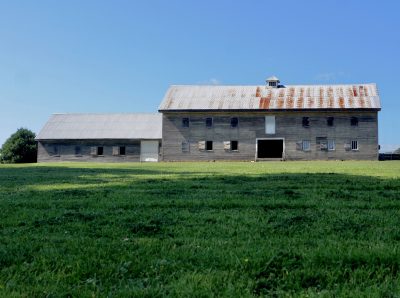
Wool Shed
One of Australia’s oldest and grandest. The upper floor likely served as dormitory accommodation for single farm workers. Convict graffiti on the walls records names, arrival dates, ships and drawings.
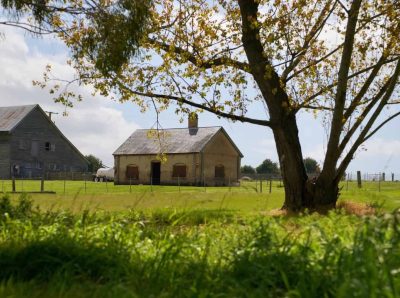
Blacksmith Shop
Slate roof to resist fire from the forge. Unglazed windows for ventilation. The blacksmith shoed horses and made fittings for the estate. Workers here also repaired tools for a nearby convict road gang.
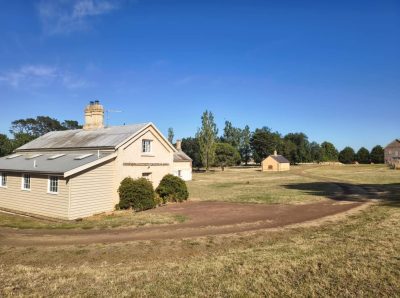
Free Settlers' Cottages
Three pairs of semi-detached cottages near the farm precinct. Originally one room down, one up. Likely housed Ticket-of-Leave holders and married workers with families.
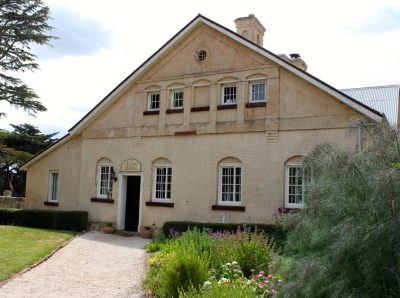
Kitchen Wing
Upstairs rooms housed female domestic servants. Barred windows deterred after-hours fraternisation. The building incorporated kitchen, larders, scullery, wash-house and a servants’ room.
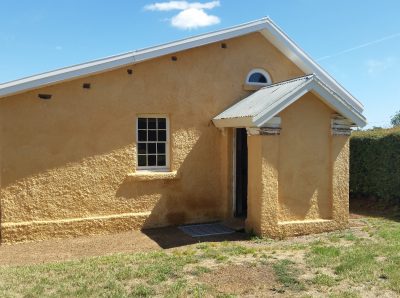
Chapel
Built to accommodate religious instruction of assigned servants, as required by government. A layman read from the Book of Common Prayer when no clergyman was available.
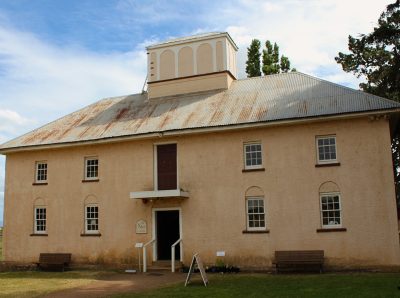
The Store
Three floors housing provisions brought by the wagon-load. Windows barred against pilferers and bushrangers. Convicts’ clothing, tools and ammunition stored under lock and key.
The wider estate included a full village of working buildings — Bakehouse, Cider House, Pumphouse, Coach House and Stables — that supported daily life for both the Archer family and their assigned workers. These structures complete the picture of a self-sufficient colonial property.

Joseph Lewis
Joseph Lewis was a groomsman of Jamaican heritage, convicted of highway robbery in London in 1831 and sentenced to transportation for life. Assigned to Woolmers Estate, he worked the stables for Thomas Archer, earning trust, skills and eventually his freedom in 1840.
He went on to marry, raise a family, run hotels in Hobart and Geelong, and build a grand home of his own.
Joseph’s story is one of hundreds. Over 35 years, more than 700 convicts passed through Woolmers. Many followed a similar path from assigned servant to respected citizen.
Assignment: A Different Sentence — featuring Joseph Lewis and the 700 convict lives that shaped colonial Tasmania.
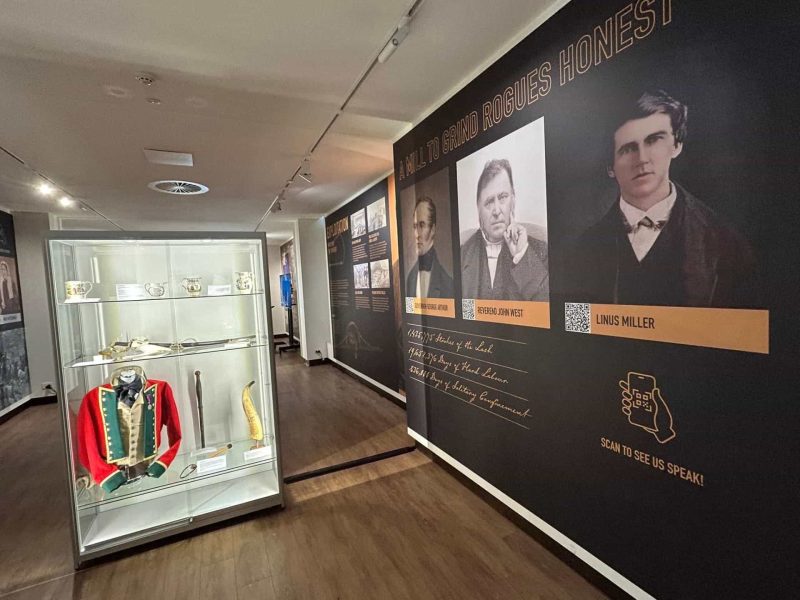
UNSHACKLED Exhibition
An immersive digital experience telling the stories of 75,000 convicts transported to Van Diemen’s Land. Walk through the journey from conviction to freedom — emotional, confronting, unforgettable.
- 45–60 min self-guided experience
- Digital interactive displays
- Original convict artefacts
- AI-generated convict portraits
- Included with general admission
Experience living history
Open Daily from 8am
Last grounds entry: 4pm
Grounds close: 6:30pm
Location
20 minutes from Launceston
17 minutes from Launceston Airport
Tasmanian Residents
FREE entry when bringing interstate or overseas guests
Admission
All proceeds support conservation of this World Heritage site